By Brooklyn | Forever Family Adventures
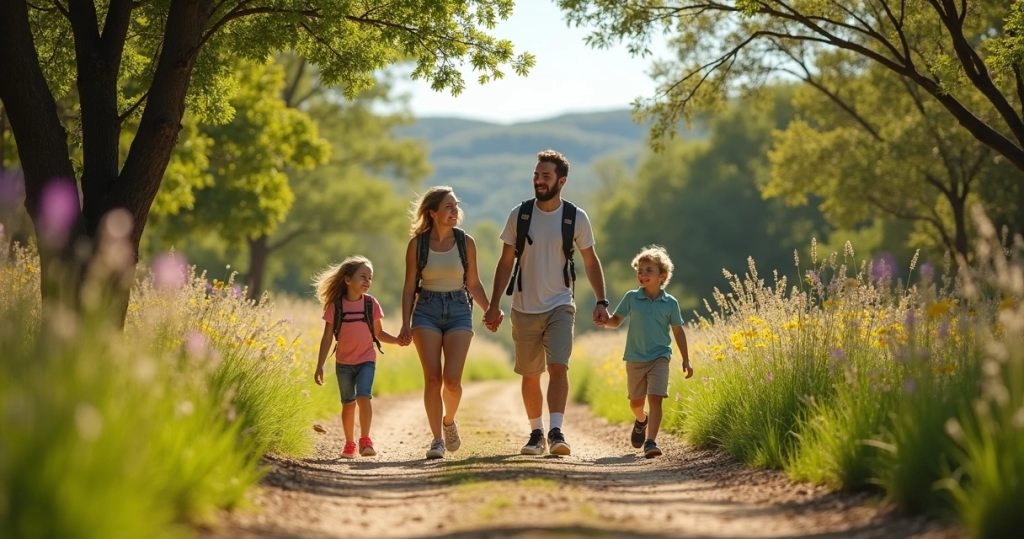
Family hiking together on a wooded trail on a sunny day
Browse our Services page to see how Forever Family Adventures can help you create unforgettable experiences together.
Why Your Family Needs More Adventures
Life moves fast. Between school drop-offs, work deadlines, sports practices, and the endless scroll of screens, weeks blur into months and months into years. One day you look up and wonder, when did we last really connect?
That’s the question that drives everything we do at Forever Family Adventures. Adventure isn’t just about having fun (though it certainly is that). It’s about creating the shared experiences that become the stories your family tells for decades. It’s the trip where the car broke down in the middle of nowhere and somehow everyone laughed. It’s the hike that felt too hard until your youngest reached the summit first. It’s the weekend camping trip that turned three distracted, phone-addicted teenagers into kids who stayed up until midnight talking around a fire.
Family adventure ideas don’t have to be elaborate or expensive. Some of the most powerful bonding experiences happen in your own backyard. But having a list of proven, meaningful activities, organized by season, age, budget, and energy level, makes it infinitely easier to say yes to adventure instead of defaulting to another evening on the couch.
This guide gives you exactly that. 25 of the best family adventure ideas, broken into easy-to-use categories so you can find the perfect activity no matter your family’s situation. We’ll also share tips for making every adventure count, how to overcome the common excuses that hold families back, and how to build a culture of adventure in your household that lasts long after childhood.
Let’s get into it.
Why Family Adventures Matter More Than You Think
Before we dive into the list, it’s worth understanding what the research actually says about shared family experiences.
Studies in developmental psychology consistently show that children who experience regular adventures with their families, especially in outdoor settings, develop stronger resilience, better communication skills, and deeper emotional bonds with their parents and siblings. But it goes beyond childhood. Adults who recall frequent family adventures growing up report higher levels of happiness and stronger family relationships well into adulthood.
Adventure creates what researchers call “shared narrative identity”, stories that a family tells together, anchored in real shared experience. These stories become the glue of family identity. They’re what you talk about at Thanksgiving. They’re what adult children tell their own kids someday.
And here’s the thing: adventure doesn’t require a passport or a fat savings account. As we explore in our post on everyday activities that build stronger family bonds, the most meaningful moments often come from the simplest outings, a neighborhood walk where everyone puts their phones away, a backyard campfire, a Saturday morning at the farmer’s market.
The barrier to family adventure isn’t usually resources. It’s my intention.
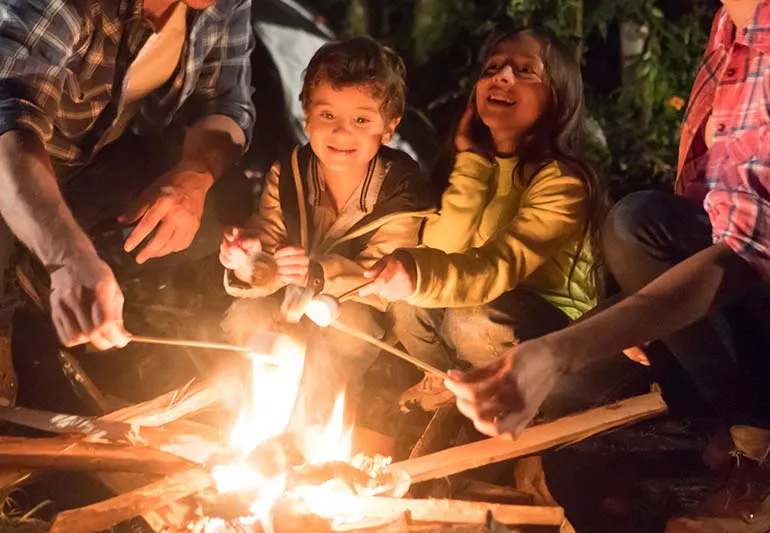
Parents and children sitting around a campfire at night
Outdoor Family Adventure Ideas
Outdoor adventures consistently rank among the most impactful bonding experiences for families. Nature removes distractions, creates natural teamwork opportunities, and grounds everyone in the present moment. Here are some of our favorite outdoor family adventure ideas across different activity levels.
1. Day Hiking as a Family
Hiking is one of the most accessible outdoor adventures available to families. You don’t need gear beyond a good pair of shoes, some water, and snacks. Even a two-mile trail through local woods offers kids the chance to explore, problem-solve, and experience the quiet satisfaction of reaching a destination on their own two feet.
Tips for success:
- Choose trails rated slightly below your family’s ability level for first outings, you want everyone to feel confident, not defeated
- Let kids lead the pace and stop when they want to observe something
- Bring a nature guide or download a plant/bird identification app to make the trail interactive
For families who want to go deeper into the benefits of outdoor time together, our post on why spending time outdoors helps families reconnect dives into the science behind it.
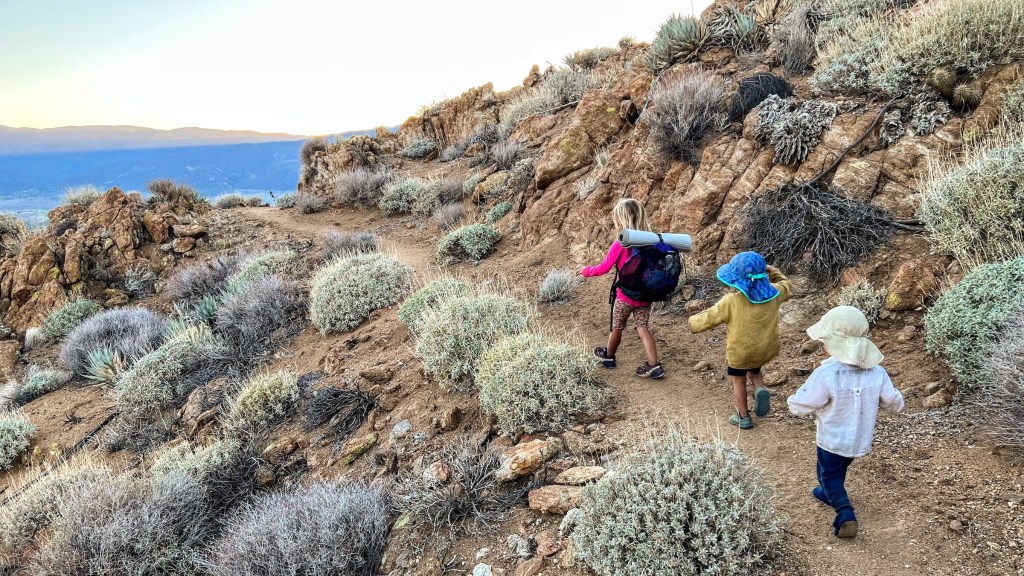
Young children hiking up a rocky mountain path
2. Family Camping (Backyard to Backcountry)
Few experiences compress more bonding into fewer hours than camping. Sleeping outside, cooking over a fire, navigating darkness together, these experiences strip away the noise of everyday life and force a kind of presence that’s hard to manufacture any other way.
If you’re new to camping, start with a backyard overnight or a fully equipped campground before moving to more remote sites. The goal isn’t ruggedness, it’s togetherness.
3. Kayaking or Canoeing
Water-based adventures are fantastic for families because they require communication and teamwork by design. You cannot paddle a canoe effectively without working together. This makes kayaking and canoeing naturally cooperative experiences rather than competitive ones.
Many state parks and lake areas offer rental equipment by the hour, making this an affordable option for most families.
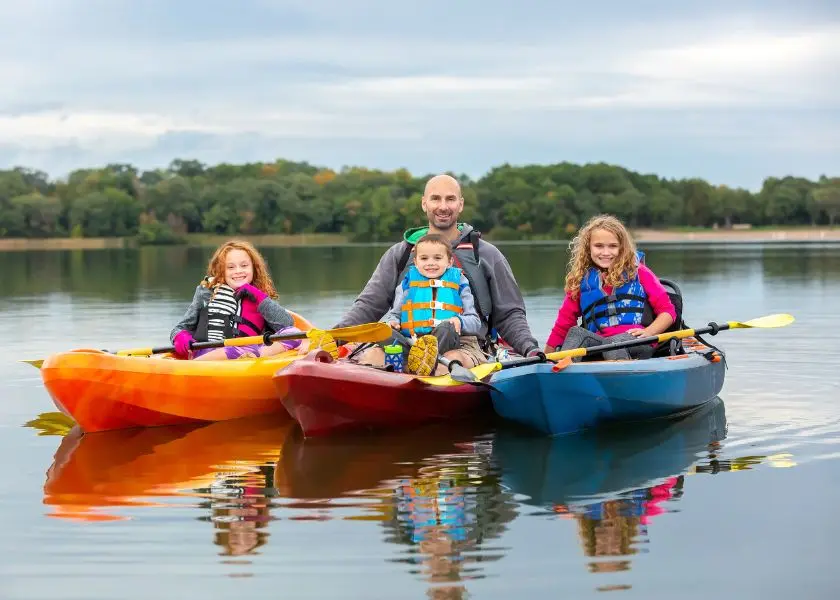
A family paddling kayaks across a calm lake on a summer afternoon
4. Bike Rides on Trails
Cycling together on a dedicated trail (rather than a busy road) creates a relaxed, side-by-side experience where conversation flows naturally. Many rail-trails across the United States are paved, flat, and suitable for all ages, some even pass through towns where you can stop for lunch.
5. Wildlife and Nature Scavenger Hunts
For younger children especially, a scavenger hunt transforms a walk in the park into an expedition. Create a list of things to find, a bird feather, three different types of leaves, a spider web, animal tracks, a flower you’ve never seen before, and let the kids lead the search.
This works equally well in city parks, suburban neighborhoods, and wilderness areas. The list can be tailored to your environment.
6. Stargazing Night
Pack blankets, drive or walk to a dark spot away from city lights, and spend an hour looking up. Download a free stargazing app like SkyMap or Star Walk so you can identify constellations together. Bring hot chocolate in a thermos. Let the conversations go wherever they want to.
Stargazing is one of those rare experiences where adults and children are equally in awe, which creates a beautiful sense of equality that kids don’t always feel with their parents.
Weekend Getaway Ideas for Families
Sometimes the best family adventures require a change of scenery. Weekend getaways don’t have to be expensive or complicated, they just need to be intentional. We’ve written extensively about why weekend getaways matter for family bonding, and the evidence is compelling: even a single night away from home can reset a family’s connection in ways that months of busy weekends at home cannot.
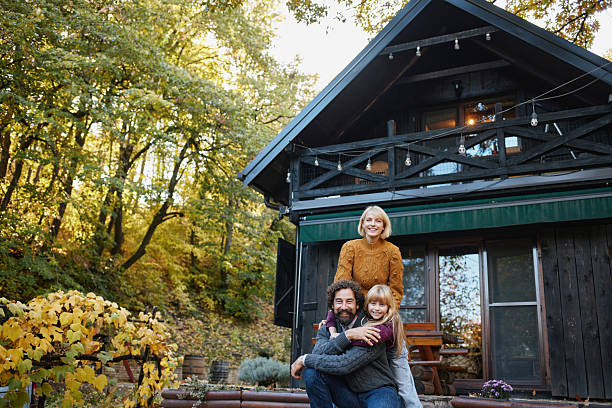
A cozy cabin surrounded by trees with a family on the porch
7. State or National Park Exploration
The United States has over 400 national park sites and thousands of state parks, many of which are within a few hours’ drive of most families. Pick one you’ve never been to, plan a simple itinerary, and spend the weekend exploring.
The key to a successful park weekend? Don’t over-schedule. Leave time to wander, sit, and do nothing in particular.
8. Small Town Discovery Trip
Pick a small town within two hours of your home that you’ve never visited. Walk the main street. Find a local diner. Look for a historical marker or museum. Visit a quirky local shop. These low-pressure weekends often become family favorites precisely because they’re unpredictable and genuinely exploratory.
9. Cabin Rental in Nature
Cabin rentals through platforms like Hipcamp or the Dyrt offer families a comfortable but immersive nature experience. You get the benefits of outdoor surroundings without giving up a bed and a kitchen. For families new to outdoor adventures, this is an ideal entry point.
10. Family Retreat Programs
Structured family retreat programs offer guided experiences designed specifically to deepen family connection. As we discuss in our post on family retreats and why they’re the best way to reconnect, the structure of a well-designed retreat removes the planning burden from parents and creates space for genuine presence and connection.
At-Home and Low-Cost Family Adventure Ideas
Adventure doesn’t require a travel budget. Some of the most memorable family experiences happen close to home, or even inside it. These ideas are free or nearly free, and can be done any day of the week.
11. Backyard Campfire Night
No backyard? A fire pit at a local park works just as well. Roast marshmallows, tell stories, play simple games by firelight. A no-phones rule makes this even more powerful.
12. Family Cooking Challenge
Pick a cuisine your family has never cooked before, Ethiopian, Moroccan, Vietnamese, and spend an afternoon making it together. Assign age-appropriate tasks so everyone contributes. Eat what you make. Talk about it.
This works especially well because it’s creative, collaborative, and ends in a shared meal, one of the oldest forms of human bonding.
13. Neighborhood Exploration Walk
Commit to exploring your own neighborhood as if you were tourists. Walk a different route than usual. Look at architectural details you’ve never noticed. Find the oldest tree on the block. Stop to talk to neighbors you’ve never met. You’ll likely be surprised how much you discover.
14. Family Game Tournament
Dust off the board games. Set up a multi-game tournament with a running scoreboard. Let each family member choose one game. Play over several evenings. The competitive element adds stakes that make even simple games feel exciting, and the shared experience of competing together is genuinely bonding.
15. Creative Family Project
Build something together. It could be a raised garden bed, a birdhouse, a piece of furniture from a kit, or a mural on a wall in the garage. The goal is a project that takes multiple sessions and requires everyone’s input and contribution.
Seasonal Family Adventure Ideas
One of the best ways to build a culture of adventure in your family is to develop seasonal traditions, recurring adventures that your family does every year at the same time. These become anchors in your family’s story.

Family picking apples together at an orchard in autumn
16. Spring: Plant a Family Garden
Starting a garden together in spring, even a container garden on a balcony, teaches patience, responsibility, and the satisfaction of growing your own food. Assign each child their own plant or section to care for. Harvest together in summer.
17. Summer: Family Water Day
Whether it’s a lake, a river, a local pool, or a backyard sprinkler, dedicate a summer day entirely to water play. Pack a picnic. Stay longer than you planned. Water has a unique ability to make everyone, regardless of age, feel young and free.
18. Fall: Leaf Peeping Road Trip
Drive to the best fall foliage in your region. Stop at overlooks, walk through crunching leaves, visit a cider mill or apple orchard. Fall color is one of those experiences that genuinely inspires awe, a powerful emotion for family bonding.
19. Winter: Family Snow Day
If you live somewhere with winter weather, claim a snow day together even when school is in session (occasionally). Build a snow fort. Have a snowball fight. Make soup from scratch when you come inside. The unexpectedness of a surprise day off together is part of what makes it memorable.
20. Annual Family Camp
Consider making an annual family camp your signature tradition. As we explore in our post on why family camps are the best way to bond and grow together, structured camp experiences provide a unique combination of guided activities, outdoor immersion, and community that families can’t easily replicate on their own.
Adventure Ideas for Families with Teenagers
Teens present a unique challenge: they’re old enough to have their own social lives and preferences, and they may resist what feels like “forced family fun.” The key is meeting them where they are, choosing adventures that feel genuinely cool and give them appropriate autonomy.
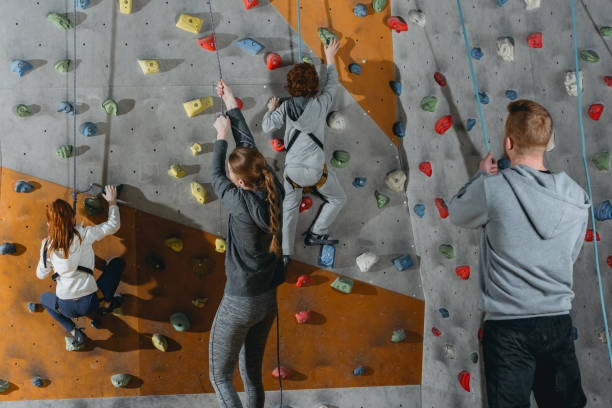
Two teenagers climbing an indoor rock climbing wall
21. Rock Climbing (Gym or Outdoor)
Climbing gyms are increasingly popular with teenagers because the challenge feels genuinely athletic and skill-based, not babyish. Many cities have excellent indoor climbing gyms with classes for beginners. Once your teen gets the bug, outdoor sport climbing becomes a shared pursuit that can last decades.
22. Kayak or Paddleboard Trip
A half-day paddling trip on a lake or calm river gives teens the freedom of their own vessel and the adventure of navigating independently, while keeping the family in the same space. The physical challenge appeals to active teens, and the natural setting naturally reduces phone dependence.
23. Volunteer Adventure Day
Combine service with adventure by volunteering for a trail maintenance crew, a beach or river cleanup, or a habitat restoration project. Teens often respond powerfully to work that has clear, visible impact, and working side-by-side with parents on something genuinely meaningful creates a different kind of bond than recreational activities alone.
24. City Exploration Day
In a city your family hasn’t explored (or even your own city), give each family member one hour to research and plan a stop: a restaurant, a museum, a shop, a park. Spend the day following everyone’s itinerary. This gives teens genuine ownership over the experience, which makes them far more engaged.
The Most Important Family Adventure Idea of All
25. Simply Showing Up — Consistently
The 25th idea isn’t an activity. It’s a mindset.
The families who look back on rich adventure histories didn’t necessarily take the most elaborate trips or spend the most money. They simply made a commitment to say yes, regularly and consistently, to time together outside the routine of ordinary life.
The science of family bonding is clear: it’s not the quality of any single experience that builds lasting connection. It’s the accumulation of small, consistent shared experiences over time. Adventure is most powerful when it becomes part of who your family is, not just something you occasionally do.
How to Overcome the Most Common Excuses
“We don’t have time.” Most families have at least one weekend day that isn’t fully committed. That’s enough. A three-hour hike on Saturday morning counts as adventure. So does a two-hour bike ride after dinner on a weeknight. Start small and build the habit.
“It’s too expensive.” The ideas on this list range from completely free (neighborhood walk, backyard campfire) to moderately priced (cabin rental, climbing gym). Adventure does not require a large budget, it requires intention.
“Our kids won’t want to.” This is real, and it matters. The solution isn’t forcing participation, it’s finding the version of adventure that excites your specific kids and starting there. A video-game-obsessed 13-year-old might hate hiking but love geocaching, which turns a walk in the woods into a real-world treasure hunt with GPS coordinates.
“We don’t know where to start.” You’re reading this guide. You’ve already started. Pick one idea from this list, just one, and put it on the calendar in the next two weeks. That’s it. That’s the whole strategy.
Contact us and we’ll help you find the perfect experience for your family’s ages, interests, and goals.
Building a Culture of Adventure in Your Family
The goal isn’t a single great trip. It’s a family that is adventurous, that approaches life with curiosity, embraces discomfort with good humor, and prioritizes time together over time apart.
Here are a few practical ways to build that culture over time:
Create a family adventure bucket list. Sit down together and let everyone, including the youngest children, add ideas. Put it somewhere visible. Cross things off when you do them. Add new things as they come to mind.
Reduce screen time deliberately. We’ve written about how screen-free time strengthens family connection, and the evidence is clear: devices compete for attention in ways that undermine even well-intentioned family time. You don’t have to go cold turkey, just create screen-free zones and times that protect space for real connection.
Debrief your adventures together. After an outing, ask everyone: What was your favorite moment? What surprised you? What would you do differently? What do you want to do next? This practice keeps the adventure alive in conversation and strengthens the shared narrative.
Let kids plan. Give each child a turn to plan a family adventure day. They can choose the activity, the food, the route. When kids have ownership and authorship, they’re infinitely more invested, and parents often discover unexpected interests and abilities in their children through the process.
A happy family with arms around each other at sunset outdoors
Your Family’s Adventure Story Is Still Being Written
Every family has a story. The question is what goes in it.
Adventures, even small, imperfect, didn’t-go-as-planned adventures, are the chapters that matter most. They’re the memories that outlast the ordinary days. They’re the experiences that shape who your children become and how they’ll parent their own kids someday.
You don’t have to wait for the perfect moment, the perfect budget, or the perfect weather. You just have to decide that your family’s story is worth writing intentionally.
Start with one idea from this list. Put it on the calendar. Show up. Let it be imperfect.
That’s the whole adventure.
Learn more about our programs and services designed specifically for families who want to create deeper connections through shared experience.